
Residual Rain
The witness in Residual Rain thinks the pavement was empty when the clock showed twenty past. The detective has a seat behind a pane, a clock over the municipal steps, a bus shelter and a recorded reason for the witness to look down. The opening sequence asks you to connect those details without treating an interrupted view as a record of the whole street.
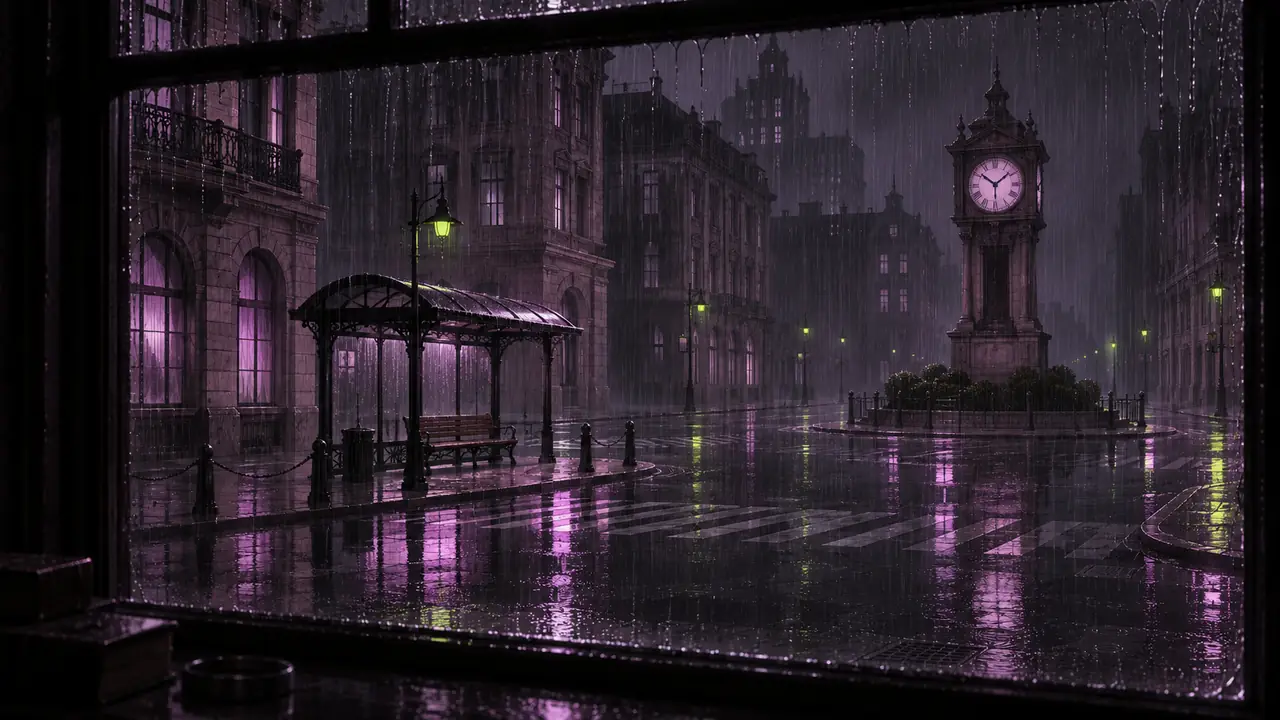
Walk from the seat to the curb
Sit where the witness sat. The foreground frame clips the left side of the street, and the shelter becomes opaque when there is standing water on its rear pane. You can take a note of both limits. Step outside and the detective gains a clear view of the clock but loses the angle that made the reflection appear. The case board keeps the views separate as you move between the two positions.
The loop alternates between an inspection, an interview and an update to the available alibi. Each piece of evidence has a limited contribution. You can attach the municipal clock to the beginning of a range. You can attach the witness to some of the pavement during that range. If those claims appear to describe the same instant, recheck where the witness was facing when they saw the clock.
Keep the street readable in the rain
The concept uses signs that can be seen without brightening the entire scene. Violet light defines the windows and their reflections. Rain softens distant colors but leaves nearer edges legible. The shelter has a dark rail that remains visible in both viewing positions. Green is reserved for selected references on the case board. With references hidden, a player should still be able to describe the route taken by somebody crossing from the steps.
The soundscape uses a short rise in tire noise when a car passes behind the shelter. It can support the fact that the street was busy. The detective would need another source to place a particular vehicle there. In a replay the noise stays at the same point even as you reconsider where the witness looked.
Question the moment of recognition
Ask whether the witness saw a face or recognised a coat. A reply can change the weight of a claim while leaving the observed movement intact. The board will let you reopen the source and see where the previous interpretation entered the file. It will also let you leave part of the alibi unresolved when no record gives you a continuous view.
Residual Rain is in prototype development. Our current exercise tests whether a reader can name one reason the clock is useful, one part of the crossing that remains unobserved and one follow-up question to take back to the witness. The clock note explains how the interval gained separate bounds. The rain visibility note considers what a witness can recognise before anyone steps out of the shelter. The crossing claim keeps both questions available.
When a new source turns up, the existing bounds remain on the board so the detective can compare what changed.